UNIC
European Universities initiative
The European Universities alliances are part of a flagship initiative of the European strategy for universities. They encompass 73 European University alliances with almost 650 higher education institutions of all types, from all across Europe. In Sweden, 26 higher education institutions participate in a European University.
European Commission about the European Universities initiative
News and events
UNIC International Sustainability Leadership Autumn School
UNIC International Sustainability Leadership Autumn School
The theme of the 2026 Autumn School held in Malmö 5-9 October is “Leadership competencies for a just transition to climate neutrality”. Within the Autumn School our students will develop a “sustainability mindset” to think, plan and act with empathy, responsibility, and care for our planet. It will also draw upon living laboratory methodologies for cocreation, critical reflection, and experiential learning developed and refined within the UNIC Centre for City Futures. Competences and skills learned within the programme will be applied to a citybased challenge in collaboration with the city of Malmö.
UNIC secures EIT Higher Education Initiative funding

UNIC secures EIT Higher Education Initiative funding
UNIC’s project, BLENDS (Boosting Learning in Entrepreneurship through New and Deepening alliance Synergies), was selected among the funded projects from a record-breaking 138 applications submitted across Europe. UNIC has been awarded the maximum amount of, two million Euro over a two-year-period to strengthen innovation and entrepreneurship capacity across the alliance.
UNIC City Leader Forum
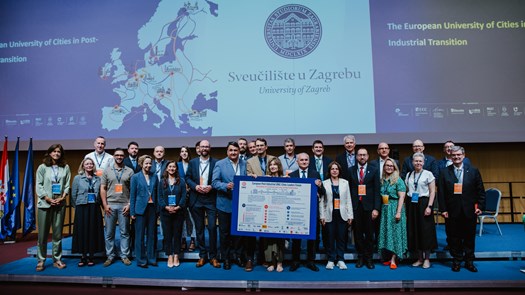
UNIC City Leader Forum
Cities and universities need each other to co-create the future of cities in post-industrial transition. Mayors, rectors, business leaders, and European partners came together for the UNIC City Leader Forum alongside representatives from European Parliament and and the diplomatic community. At a time of climate, social, and economic transformation, collaboration is not optional, it’s essential. Cities and universities do not act alone. They need each other to shape meaningful, lasting solutions.
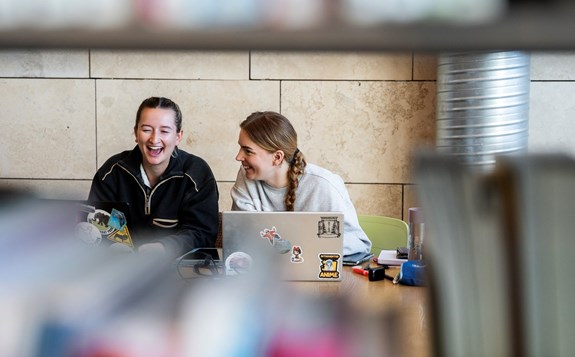
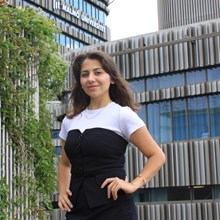
Ayşe uses her university as a springboard to the world
For Ayşe Nur, university is much more than lectures, exams and a route to a degree. It is also a gateway to the world. During September, the student from Koç University in Istanbul is spending a month in Malmö through Malmö Residency 2026. Here, she hopes to explore new academic environments, build...

Ayşe uses her university as a springboard to the world
For Ayşe Nur, university is much more than lectures, exams and a route to a degree. It is also a gateway to the world. During September, the student from Koç University in Istanbul is spending a month in Malmö through Malmö Residency 2026. Here, she hopes to explore new academic environments, build networks and investigate how her strong interest in sport can be used to create a sense of community and drive social change.
– I try to use academia to find opportunities to travel abroad and experience other environments and meet new people, says Ayşe.
She studies Economics as well as Media and visual arts at Koç University in Istanbul. Alongside her main studies, she is also following a track programme and has devoted considerable time to English studies to increase her opportunities to study and work internationally.
It is a deliberate strategy. Ayşe is the first generation in her family to attend university and describes education as an opportunity she wants to make the most of.
– I make the most of my university because I am motivated. I apply for scholarships, programmes and other opportunities that allow me to gain international experience.
Europe as a classroom
This approach has already taken her to several European universities and educational environments. She has taken part in an Erasmus exchange in Germany, studied at the Warsaw School of Economics on an international summer programme and participated in a sustainability week in Belgium. Altogether, she has travelled independently in around 15 European countries.
Like Malmö University, Koç University is a member of UNIC, The European University of Cities in Post-Industrial Transition. Ayşe herself first came into contact with UNIC through her university and has taken part in activities linked to the alliance.
One of six selected
In September, Ayşe is one of the participants in Malmö Residency 2026. The programme is a collaboration involving more than 60 Malmö-based companies, the City of Malmö, the Swedish Institute and Media Evolution, and is funded by the City of Malmö, Malmö University and Malmö Generate District.
For one month, participants are given the opportunity to live and work in Malmö, with access to networks, events and contacts across the city. More than 2,600 people from around the world applied to the programme. Six were selected, and one place was reserved for a student from a UNIC university.
For Ayşe, it is precisely the encounters between people, ideas and different environments that appeal to her.
– Media Evolution has been very friendly and helpful. They introduce us to people and organise excellent events. I like this kind of working environment. It is the sort of environment I would like to work in myself.
Malmö surprises
Her first impression of Malmö is of a city that differs from many of the other European cities she has visited.
– Malmö is very creative. The design, urban planning and green spaces really stand out. And the city feels genuinely international.
She has also been struck by how widely English can be used.
– In many other places, almost everything is in the local language. Here, it is easier to find courses in English and almost everyone can communicate in English. That means a great deal when you arrive as an international student.
She also appreciates the proximity to the sea, the cycling culture and the fact that the city is relatively easy to get around. For someone coming from Istanbul, the distances are almost an experience in themselves.
– In Istanbul, it can take two hours to get from one part of the city to another. Here, you can also get to Copenhagen quickly and suddenly find yourself in another country.
Even the food has surprised her.
– I did not expect the food to be so good. I feel that I eat very healthily here, and there are so many restaurants to choose from.
Sport as a tool for change
But her stay is not only about what Ayşe can take away from Malmö. She also wants to test an idea of her own.
Sport has been part of her life since her school days, and in Türkiye she has been involved in initiatives that use football to empower girls. Through football schools, tournaments and sponsorship, sport can become a meeting place while also contributing to other social projects.
In Malmö, she wants to develop the same idea through running.
The idea is simple: to create a running group where international and Swedish students can meet, run together and build social networks. In the longer term, the activities could also be used to raise money for charitable causes.
For Ayşe, running is also a way of getting to know a new city.
– Whenever I arrive in a new country, I always look on social media for running groups. It is a way to meet people. I want to create those kinds of forums wherever I am.
She also sees opportunities to develop the concept within UNIC and connect students across several of the alliance’s university cities. It could become a form of cross-border community-building where sport, social media and entrepreneurship come together.
“I want to be a voice for others”
Behind her strong drive is a broader ambition. Ayşe describes a society in which people’s economic and social backgrounds can still have a major impact on the opportunities available to them. As a young woman from a family with no previous tradition of university education, she wants to show that other paths are possible.
She also highlights her sister, who, like Ayşe herself, has pursued higher education.
For Ayşe, her own educational journey is therefore not solely an individual project. In the longer term, she wants to use her experience and education to help create opportunities for other people.
– I want to help other people and contribute to my country. I want to be able to be a voice for people who have not had the same opportunities.
Perhaps that is also why a month in Malmö means more than simply another entry on a list of countries visited. Every new university environment, every international programme and every new contact becomes part of something bigger – an effort to gather knowledge, experience and networks that can later be used to create opportunities, both for herself and for others.
From Malmö to Bilbao: “I arrived as a student and I'm leaving with a researcher's perspective”.
Osayande Godwill Omorose, a student at the Master's program in Urban Business and Development at Malmö University tells us how his UNIC internship at the University of Deusto has been a turning point in the way he sees and understands the world.
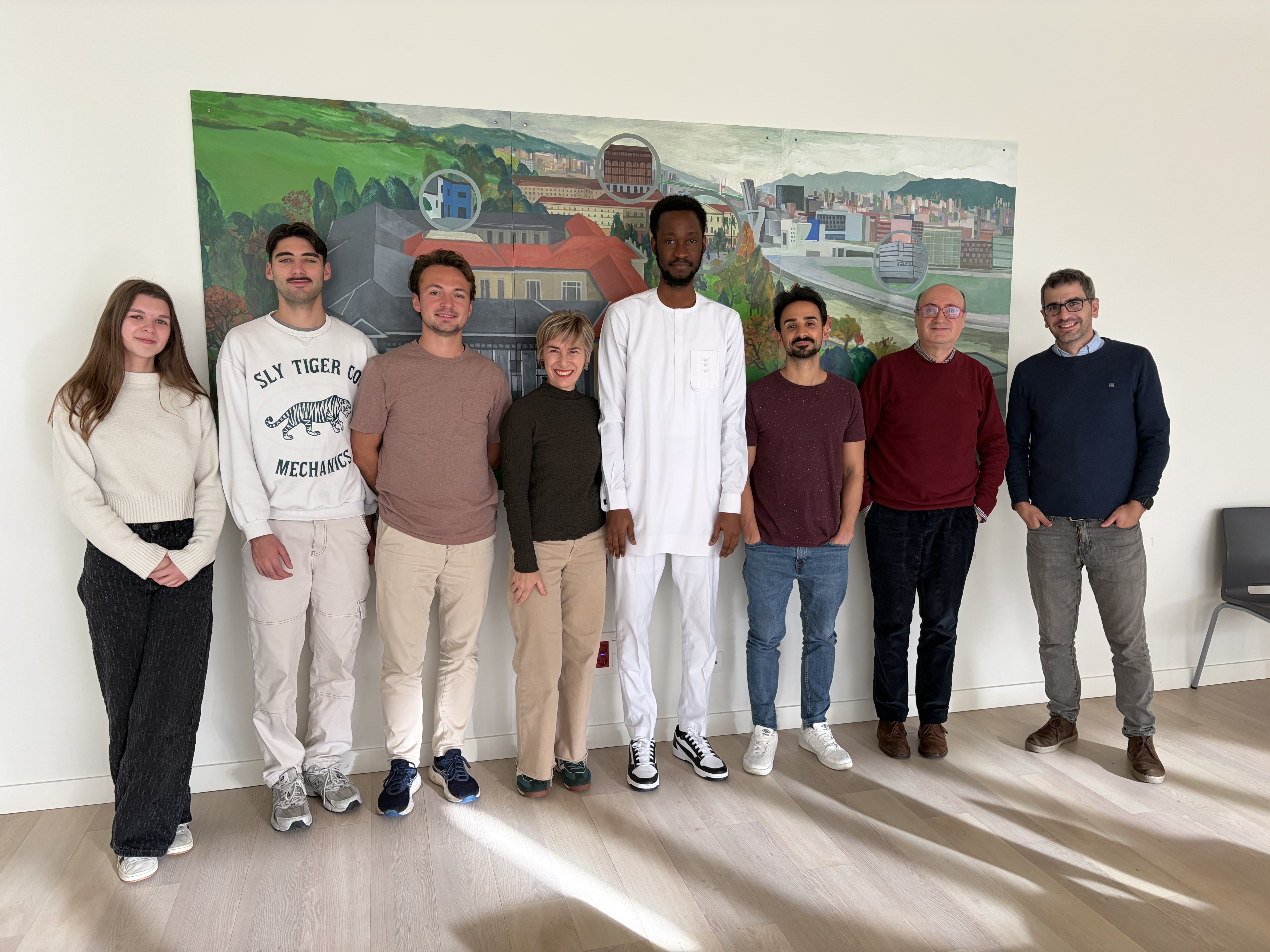
From Malmö to Bilbao: “I arrived as a student and I'm leaving with a researcher's perspective”.
Osayande Godwill Omorose, a student at the Master's program in Urban Business and Development at Malmö University tells us how his UNIC internship at the University of Deusto has been a turning point in the way he sees and understands the world.
Arriving in a new city always presents a challenge: adapting and finding a way to contribute. For Osayande his time at the University of Deusto was more than an academic journey. This internship was an experience that combined applied research, international learning, and personal discovery.
With a background in finance and economics, and work experience in financial services and entrepreneurship in his native Nigeria, he arrived with a keen interest in food sustainability. His time at Deusto allowed him to work with a multidisciplinary team, hone technical skills, and build international connections.
The opportunity arose within the framework of UNIC (European University of Cities in Post-Industrial Transition). During this period, he joined the European project “Precious,” focused on preventing and reducing food waste. “It is an issue that cuts across all dimensions of sustainability: economic, social, and environmental. That is why it is so relevant to the city and to public policy,” he says.
Rebeca Cortázar, professor at the Faculty of Engineering at the University of Deusto describes how the internship was created: "With this pilot program we sought to offer research stays in university environments, where students could address real challenges related to cities. This proposal came from DeustoTech - Deusto Institute of Technology, reached Malmö, and finally brought Osayande to Bilbao."
Per Hillbur, Associate Professor of Environmental Science at Malmö University, considers the cooperation between both universities the key to ensure the success of this initiative: "In order to make these internships possible and ensure that the exchange is of the highest quality, cooperation is required between the universities, their international offices and academics on both sides. This was a very successful collaboration that we hope to develop further in 2026 and beyond within UNIC." 💫
Thanks to the coordination efforts, Osayande quickly integrated into the group. The work was supervised by faculty from the School of Engineering (Facultad de Ingeniería - Universidad de Deusto) and Deusto Business School, allowing him to approach the problem of waste from different perspectives. This collaboration not only enriched the student, but also provided a source of reflection for his mentors.
“Academically and professionally, this internship has provided me with a real-life scenario of what research implies. It is, in fact, my first experience in a European work environment, which is very valuable for my future.”
Text: Ane Bores Pascual.
Structures for collaboration
Centre for City Futures
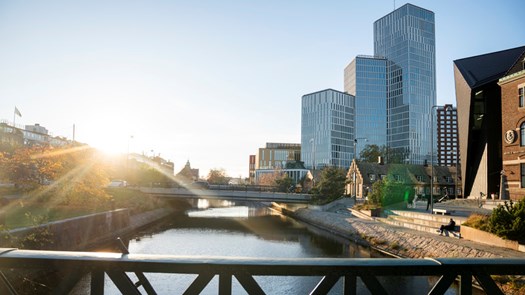
Centre for City Futures
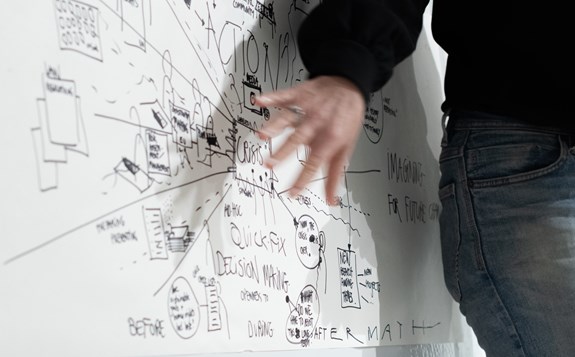
Along with Oulu University and University College Cork, Malmö leads the Center for City Futures (CCF), a platform for collaboration on innovation and sustainable social development. City Labs is one of several methods for identifying new models for collaboration with cities, citizens, and other stakeholders. Within the CCF, the Re-imaginatorium method has been developed in close collaboration with the research centre Imagining and Co-creating Futures. The method involves researchers, teachers, students, citizens jointly exploring new ways of organising ourselves, collaborating and creating value around our lives and our communities.
Centre for Teaching and Learning
Centre for Teaching and Learning
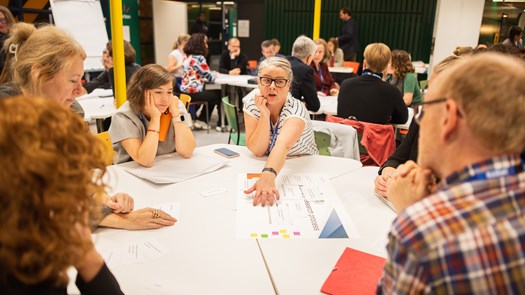
UNIC's Teaching and Learning Centre promotes collaboration on teaching methods and didactics within the alliance. By developing virtual mobility solutions and a shared digital campus, opportunities for global engagement and joint courses are created. The centre offers professional development for teachers via InterTeach.
Capacity Building Centre
Capacity Building Centre
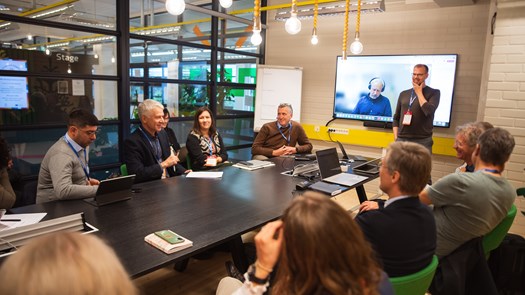
The Capacity Building Centre is a central hub for capacity development, providing resources, tools and networking opportunities to empower individuals within the UNIC Alliance. Through collaborative work, the centre responds to the changing needs of partner institutions and facilitates necessary changes in mobility formats, partnerships and technical tools.
Facts UNIC
Funding
UNIC is funded by the European Union's Erasmus+ programme.