Sustainable Digitalisation Research Centre
Our vision is to be the leading research environment for interdisciplinary research on sustainable digitalisation, e.g. by contributing knowledge and methods on how to realise digitalisation that is sustainable from a social, economic, ecological as well as technological perspective.
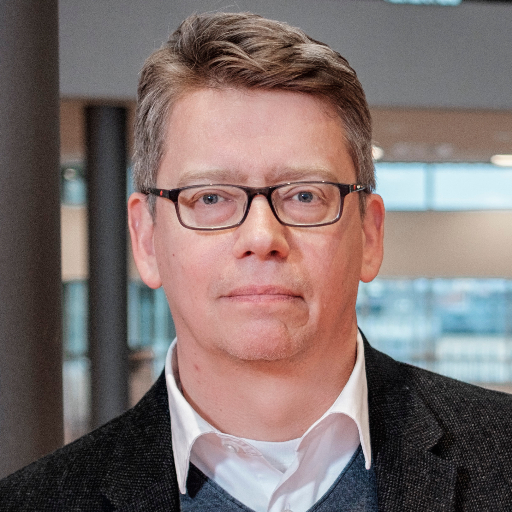
Paul Davidsson, Director
Two overarching research areas
Sustainability of digitalisation
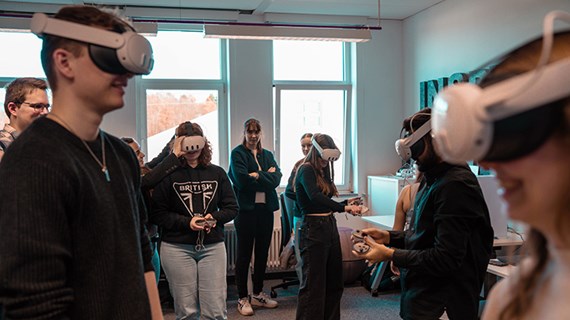
Sustainability of digitalisation
How can we harness the opportunities offered by digitalisation whilst taking into account key social factors such as trust and inclusion, and technological factors such as resource efficiency and reliability?
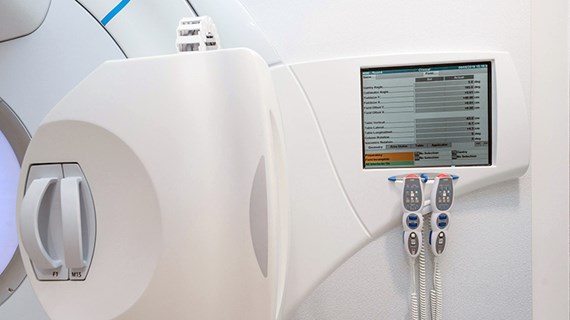
Researchers, publications and projects
We are always interested in new collaborations with academia and industry. Please contact our researchers if you have any questions.


Christian Andersson


Lisa Björklund Boistrup


Petri Gudmundsson

Kristofer Hansson


Carolina Martinez


Marie-Louise Möllerberg

Simon Niedenthal


Liselotte Paulsson


Arezoo Sarkheyli-Hägele


Maria Silwer


-
 Research project
HIVE – A Scenario Planning Tool for Energy-Efficient Mobility
-
Research project
Towards Repurposing LLMs as tools for embodied introspection
-
Research project
Network for AI literacy in STEM education: Opportunities and challenges
-
Research project
Educating for the Age of Agentic AI – Preparing Students for the Next Generation of Intelligent Systems
-
Research project
Data Spaces in Skåne
-
Research project
LLM-assisted travel behavior analysis for eldery mobility: New approach for decision support
-
Research project
AI in relation to teaching: opportunities and challenges
-
Research project
Enhanced information system for improved context-aware travel support
-
Research project
Data Conversations
-
Research project
Human-robot collaborative learning for ultralight electric utility vehicles
-
Research project
Enhancing in vitro fertilization with environmental optimization using artificial intelligence (EIVF-AI)
-
Research project
Digital when possible, physical when necessary: An exploration of the digiphysical world of Ängelholm hospital
-
Research project
Feedback in digital learning tools – opportunities and barriers to learning mathematics for the diverse range of pupils in the maths...
-
Research project
EvacAware: Real-Time Intelligence for Coordinated Evacuations
-
Research project
Intelligent and Trustworthy IoT Systems
-
Research project | DOCTORAL PROJECT
Autonomous transport and connected vehicles
-
Research project
Realizing the Potential of Agent-Based Social Simulation
-
2027 | Conference paper
Interpersonal Violence and Abuse in Smart Homes: A Systematic Mapping Study
Fazeleh Dehghani Ashkezari, Martin Höst, Kayode Sakariyah Adewole, Klara Svalin, Andreas Jacobsson
-
2027 | Conference paper
Data-Driven Parameter Estimation of Gray-Box Building Thermal Models
Ali Soleimani, Paul Davidsson, Romina Spalazzese, Reza Malekian
-
2026 | Article in journal
Early wildfire escalation prediction with temporal validation and statistical benchmarking in a mediterranean region
Gökhan Yüksek, Ali Akdagli, Serdar Ekinci, Davut Izci, Erdal Akin
-
2026 | Article in journal
Detecting and Ranking Recurrent Bottlenecks on Urban Expressways: A Speed-Only Severity Index from Floating Car Data
Turan Alkan, Mehmet Tektas, Necla Tektas, Selahattin Kosunalp, Vedat Tumen, Erdal Akin
-
2026 | Article in journal
Exploring student discourses on AI-informed citizenship in mathematics education
Christian H. Andersson, Lisa Björklund Boistrup, Helena Roos, Viktoria Sjöblom
-
2026 | Article in journal
Translation, cultural adaptation, and descriptive psychometric pilot evaluation of the Swedish Cancer Support Source-caregiver
Maria Samuelsson, Jenny Jakobsson, Benjamin Maus, Carl Magnus Olsson, Marie-Louise Möllerberg
-
2026 | Conference paper
Online Unsupervised Anomaly Detection with Model Explainability and Human-in-the-Loop Feedback
Alex Oachesu, Ingemar Karl Javier Lundh, Kayode Sakariyah Adewole, Jan A. Persson, Fredrik Karlsson
-
2026 | Conference paper
A Comparative Study of Meta-Heuristics for the Competence to Shift Balancing Problem
Linus Magnusson, Simon Sandén, Johan Holmgren
-
2026 | Article in journal
Dual nest pigeon-inspired optimization and its application in engineering constrained optimization problems
Wei-Lin Chen, Kai-Qing Zhou, Arezoo Sarkheyli-Hägele, Shao-Qiang Ye, Feng Qin, Azlan Mohd Zain
-
2026 | Conference paper
Educating Artificial Intelligence for Humanity and Society – a Blueprint
Helena Lindgren, Matilda Arvidsson, Elmira van den Broek, Donal Casey, Dimitri Coelho Mollo, Liane Colonna, Valentina Fantasia, Anna Foka, Fabian Lorig, Lina Rahm, Pedro Sanches, Jason Tucker
Research themes
The research is organised into five themes that correspond to key areas of digitalisation.
Health and well-being
The use of digital technologies to support all phases of healthcare, including preventive care and well-being. It can empower people to proactively engage with their health and manage their recovery from illness, but also to share data to improve outcomes and reduce inequalities.

Home and everyday living
This includes the use of digital technologies and the impact of digitalisation in everyday life. Homes are of particular interest as they are increasingly filled with internet-connected devices such as cameras, microphones and other sensors.


Education and lifelong learning
The use of digital tools to facilitate lifelong learning in different contexts, including both professional and informal learning in different sectors of society.


Transport and mobility
How can digital technologies support transport that is accessible, efficient and sustainable? Our theme brings together research on travellers’ experiences, public transport planning and autonomous vehicles. We develop and evaluate digital systems while examining who can use them, how they affect transport services and what changes they bring to people’s work.
Our research focuses on
- Accessible travel: understanding barriers faced by travellers and designing public transport information that responds to their situation, including service disruptions.
- Demand-responsive transport: modelling and evaluating flexible services, traveller demand and operational choices.
- Planning and decision support: using simulation, optimisation and transport data to assess services and support decisions.
- Autonomous vehicles: developing AI methods that allow electric utility vehicles to learn from human driving and interaction.
-
2026 | Article in journal
Realised Pooling, Pickup Reliability, and Mobility Dependence in Rural Demand-Responsive Public Transport: Evidence From a Swedish DRT Pilot
Shairyar Malik, Åse Jevinger, Jan A. Persson
-
2026 | Article in journal
From traceability to intelligence: a review of blockchain, IoT, and AI for transparent supply chains
Fiza Siyal, Antonella Guzzo, Fahed Alkhabbas, Carmelo Felicetti, Domenico Sacca, Francesco Pasqua
-
2026 | Article in journal
A Modular Synthetic Demand Generation Framework for Demand-Responsive Public Transport
Shairyar Malik, Jan A. Persson, Åse Jevinger
-
2025 | Article in journal
On demand-responsive transport configurations, traveller interaction and preferences: a survey from the perspective of older people
Åse Jevinger, H. Svensson
-
2025 | Article in journal
Implementing Dynamic Travel Time Calculation in EMS Simulations: Impacts on Prehospital Stroke Care and Transportation
Saeid Amouzad Mahdiraji, Marcus Juninger, Nicholas Narvell, Johan Holmgren, Radu-Casian Mihailescu, Jesper Petersson
-
2024 | Article in journal
Stated opinions and potential travel with DRT – a survey covering three different age groups
Åse Jevinger, Helena Svensson
-
2024 | Article in journal
Artificial intelligence for improving public transport: a mapping study
Åse Jevinger, Chunli Zhao, Jan A. Persson, Paul Davidsson
-
2023 | Conference paper
Integrate, not compete! On Potential Integration of Demand Responsive Transport Into Public Transport Network
Sergei Dytckov, Paul Davidsson, Jan A. Persson
-
2023 | Conference paper
Context-Aware Travel Support During Unplanned Public Transport Disturbances
Åse Jevinger, Emil Johansson, Jan A. Persson, Johan Holmberg
-
2023 | Article in journal
Simulating the Impact of Shared Mobility on Demand: a Study of Future Transportation Systems in Gothenburg, Sweden
Fabian Lorig, Jan A. Persson, Astrid Michielsen


Energy and buildings
Includes digital solutions to improve the production, distribution and consumption of energy, as well as to increase the safety and efficiency of buildings.


Advisory board
-
Johan Eker – Chair
Senior Researcher; Professor,
Ericsson; Lund Institute of Technology
-
Mattias Esbjörnsson
Senior Research Project Manager
RISE – Research Institutes of Sweden
-
Anna Stankovski Clark
Head of Digitalisation
Trivector Traffic
-
Maria Stellinger Ernblad
Director of Digitalisation
City of Helsingborg
-
Tobias Olsson
Dean, Faculty of Learning and Society
Malmö University
Management group
-

Paul Davidsson – Professor
paul.davidsson@mau.se
-

Kristofer Hansson – Senior lecturer/Assistant head of dep.
kristofer.hansson@mau.se
-

Carl Magnus Olsson – Associate Professor
carl.magnus.olsson@mau.se
-

Romina Spalazzese – Associate Professor/Program director
romina.spalazzese@mau.se
-

Carolina Martinez – Associate Professor/Senior lecturer
carolina.martinez@mau.se
-

Andreas Jacobsson – Professor/Deputy vice-chancellor
prorektor@mau.se
-

Ulrika Sjöberg – Professor
ulrika.sjoberg@mau.se
-

Bahtijar Vogel – Head of department/Senior lecturer/Associate Professor
bahtijar.vogel@mau.se
-

Lisa Björklund Boistrup – Professor
lisa.bjorklund.boistrup@mau.se
-

Dario Salvi – Associate Professor/Senior lecturer
dario.salvi@mau.se
-

Elisabeth Mangrio – Associate Professor/Senior lecturer
elisabeth.mangrio@mau.se
-

Jan Persson – Senior lecturer/Associate Professor
jan.a.persson@mau.se
-

Per Linde – Senior lecturer
per.linde@mau.se
-

Reza Malekian – Professor
reza.malekian@mau.se